Veterinary

A veterinary PACS for general practice and special referral
  • Vendor-neutral support for ultrasound, X-ray, CT, MR, and echo across species.
  • Structured veterinary reporting⁠—including ASE-aligned echo templates.
  • Teleradiology routing built into the workflow.
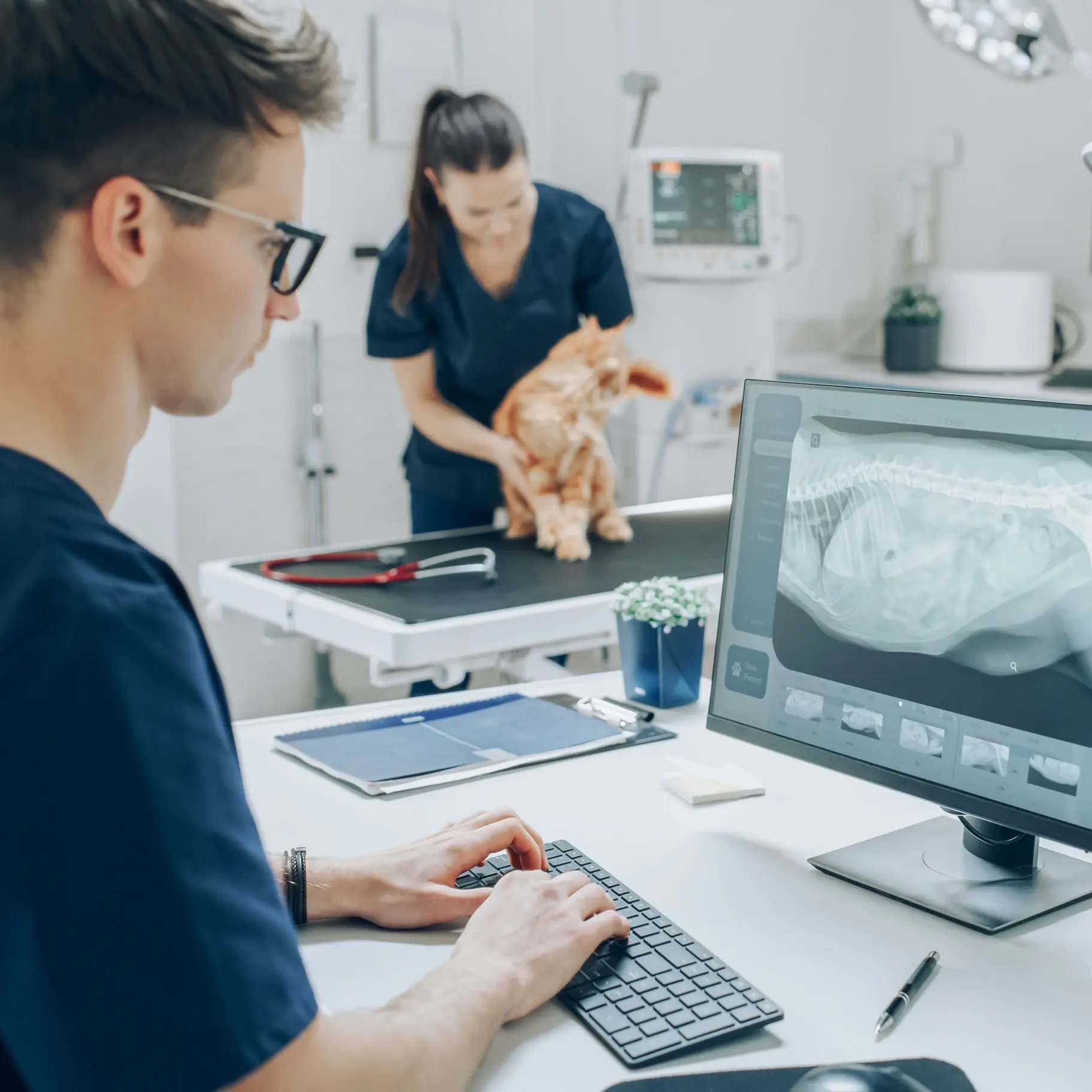
Veterinary clinic specialist working on cat

Key workflow challenges facing veterinary practices

Veterinary practices need a platform that handles species variability, teleradiology coordination, and client communication⁠—without expensive overhead.

person and graph on screen-icon

Teleradiology coordination

Many practices send studies to remote board-certified radiologists for interpretation. Managing image transfer, read requests, and report return without a dedicated platform is slow and cumbersome.

tooth and cat-icon

Species and protocol variability

A single day might include canine echocardiography, feline abdominal ultrasound, and equine radiographsno two studies follow the same protocol or measurement norms.

People-talking-icon

Client communication

Pet owners expect rapid results, clear communication, and fast turnaround.

tablet graph-icon

Capturing the measurements

Veterinary patients can't be asked to hold still. Movement, stress, and species variability make it difficult to capture complete measurements during the exam—often leaving gaps that need to be filled afterward.

How Studycast supports the veterinary workflow

Studycast supports the full veterinary imaging workflow⁠—from registration to teleradiology to client communication.

Registration

Patient and owner registration

Create a patient record for the animal—species, breed, weight, age, sex—and link to the owner account.

Ordering

Study order and protocol selection

The ordering vet selects the study type and species-specific protocol.

Images

Image capture and DICOM upload

Images from ultrasound, digital radiograph, or CT push to Studycast via DICOM.

Teleradiology

Teleradiology routing

Studies requiring specialist interpretation are flagged and routed to a contracted teleradiology service or board-certified veterinary radiologist directly within the platform.

Report

Report receipt and integration

The radiologist’s report returns into Studycast, auto-linked to the patient record and encounter, with a notification to the ordering vet.

Client

Client communication

Use the report to generate a client-friendly summary or print the full report. Records are exportable for referral to specialty centers.

Archive

Archive and retrieval

Studies are stored in a searchable archive—supporting follow-up comparison and specialist referral without burning a CD.

Faster teleradiology, species-fit reporting, easier client comms

What veterinary practices get when imaging runs on a vendor-neutral, structured platform.

Faster teleradiology turnaround

Studies route directly to teleradiology partners, with reports returning to the same patient record.

Structured reporting

Veterinary echo templates align with ASE guidelines. Worksheets cover ultrasound, X-ray, CT, MR, and more.

No hardware to maintain

Cloud-based platform—no on-premises servers, no local backups, no data storage to manage.

Easier client communication

High-resolution image sharing gives pet owners a reliable digital report—not a low-quality printout.

Vendor-neutral by design

Works with the existing imaging equipment you have today, and the equipment you might add tomorrow.

Practical security

Encryption, role-based access, and PIPEDA-aligned standards protect patient and client data.

Veterinary workflows by role

Veterinary imaging spans general practice vets, specialty referrers, technologists, and the practice admin team.

Roles

sonograph-icon-2

Sonographers & technologists

admin-icon

Administrators

person computer-icon

IT

Fast facts

140+

study-specific worksheets

Vendor-neutral

works with your existing modalities

ASE-aligned

veterinary echo reporting

stat-linear

See the platform that top vet school cardiology departments rely on

Show us how your imaging workflow runs today⁠—and we’ll show you what changes with a vendor-neutral platform.